The wicked queen was once a goodly girl, but goodly girls don’t last in poison courts.
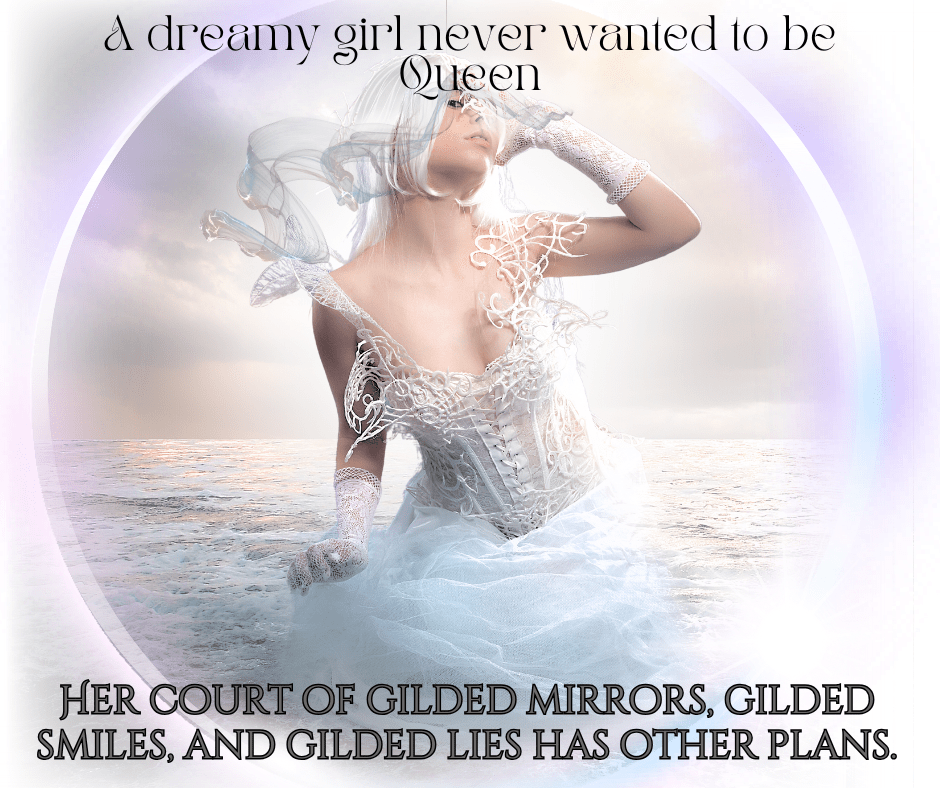
In a court of gilded mirrors, gilded smiles, and gilded lies, she is an insignificant nothing. White-haired, gangly, and gawky, she stuffs her soft dreams behind an iron façade.
But when her father arranges a foul betrothal for her in another city, she craves at least one tiny taste of freedom before her fate boxes her into nothingness.
She dares to enter the honeyed radiance of the carnival, where she sneaks behind one of the rides and finds…
An open door.
Inside a small room, on time-eroded planks, kneels a beautiful boy scarcely older than she, and as the wind brushes sand across her slippers, the boy glances up.
Here, she takes her first step into freedom.
The first 3 chapters are below! Or if you want to grabby now, it’s on Amazon and other retailers.
Under the wicked queen’s bed lies a journal forsaken on the floorboards. Dust fuzzes its leather, motes plume from its creases, and between the loops of aged ink on its pages winds a tale laden with the dreams of a nobody…
I Will Eat Nothing But Curdled Dreams…
I am going mad in this place. Everywhere I turn, I face gilded mirrors, gilded smiles, gilded lies. This meaningless merry-go-round of velvet-swathed nobles sickens me, and the sounds of frivolity haunt my sleepless nights with their vacant melodies. No heart sings in this music.
I do not belong here. I hunger torridly for things other than the vicious nothings that dance with me beneath the teardrop chandeliers.
Why must I stay? I am an insignificant nobody. I mimic their emptiness, painting my face into a formidable mask and lacing up my figure in steel-boned corsets, but what am I scheming for?
The same skulls and bones shift beneath our skin, but if one’s soul craves differently—what then?
My mother hunts my days like a hawk, picking my bony hours clean of anything that could potentially be mine and mine alone. She loves nothing more than to rend the flesh from my dreams; already, she has pared them down to tendon and bone, and tonight, she swept grandly into my bedchamber like an incurable disease. Silken robes swaddled her supple limbs, but their pastel hue couldn’t disguise her flinty eyes. She alighted on my bed like a hawk by a dove.
I didn’t bother fleeing—to what end? She controls my life. I only straggled up, mussed and morose in my nightmare-drenched gown.
She pronounced without preamble: “Your father has arranged a marriage for you.”
Dully, I listened as she relayed my imminent engagement to a vile, unsightly man, a man thrice my age and distantly related to the magnate of the Second Demesne.
I will be ousted from everything I know, dispatched to a demesne where I’ve never been, to belong to a man I will never want.
And naturally she trilled at my deadened reaction, savoring my misery in her lofty, lifeless way. “Why frown, my babe? No one better would have you. More stork than girl. Gangly, gawky, squawky, irascible. You are an uncanny creature. Thin as bird legs; taller than most men. And your eyes! So weirdly dark. Skin pallid as a lizard’s belly. And this.” She flicked her fingernails over my almost-white hair, her lips pursed. “Looks more like spider web than hair.”
I mashed down any retort, because every word I spoke became a weapon that she wielded better.
At last, she departed, but her words kept puncturing my mind like needles sewing my burial shroud shut. Marriage had manacled her, and she will make sure that it chokes me, too.
Both of us were born into our ancestors’ cradle, squeezed into unsuited shoes, made to bow behind our veils of courtesy, and cultivated into unctuous obeisance. Now we parade through our days in wrathful and powerless pageantry.
But I am like a changeling child; I am gone fetid with hope.
Slumped in my plush bed, heartsick and bloated with the day’s cruelties, I envision my fate spanning the decades ahead. Relegated to a minor nobleman’s wife in a distant demesne, a woman of gimlet eyes and vinegar-sour lips; addled creature sharp of tooth and dark of eye, my rancor fusing with my sinew and bone.
I will pucker up like a mouth as dark as blood.
I will eat nothing but curdled dreams.
And when my skin sags, ancient, upon my bones, and my life has withered behind me, the masked charade I wear will have saturated me heart and marrow and soul.
And then I will be as stiff-spirited and iron-dead as my mother.
How can I escape?
My fate is closing around me like a circle of foes.
Beneath Aloof and Unfriendly Stars
My answer came to me tonight on the castle’s airy terrace, as my noble-girl friends and I were hoisting our wineglasses aloft, a-slosh with trifling mirth and token intoxication—or at least they were. I, obstreperous thing, nursed a noisome and contrary mind.
Breathing in the scents of apples and pinecones beneath aloof and unfriendly stars, I folded my thin and weedy arms on the marble balustrade, and I judged the moonlit glades below us, where lanterns spilled pools like molten amber across the flagstone paths. Behind those screens of foliage, faithless lovers snatched ardent embraces, but I did not heed their amorous machinations and their vapid laughs; I relished, instead, the misting drizzle that plastered my hair moistly to my crane-like neck, for I was overly sweating from the packed ballroom—and sweating virulence, too, like poison nettles.
Around me, my companions’ lips resembled cut-open creatures: split open to raw pink tongues, their mouths a-swarm with chortles, their skirts all rustling like a legion of snakes. Everything about them slipped slick and slithering and oil-like, with slurs as sharp as thorns burgeoning from mouths as red as roses.
With my mind brimming with spiteful thoughts, I lifted my face to the misting rain and flouted the stars, swearing I would fly from this inimical place.
That was when the nocturnal wind whisked sand and promise and raindrops across my lips, pulling with it a thread of unfamiliar sensations: uninhibited hilarity and spun sugar; ruddy-cheeked merriment and fried bread, crisp and succulently hot and flavorsome with seasoned oils and piquant spices.
Mouthwatering.
For a moment, I almost—almost wondered…
One of the girls snickered. “The carnival is arriving today!”
The carnival.
As a young girl, I’d thought the possibilities here at the castle unspooled to infinity, but I’d only been a child, inundated by perfume, my lungs jammed with overpowering lilac and jasmine as I’d danced dizzyingly with the First Magnate’s impassive sons. Back then, I’d thought everything was heady, drugging, potent.
Now?
I have looked beneath their surfaces and found nothing behind their cravats, their brooches, their smiles. Mere insubstantial puppets bedecked with trinkets, made of hollows, their mouth-holes dense with empty, caustic calumnies.
Only one kind creature dwells in this place: Ambassador Elegaine—tall, spindly, with at least half a century behind him, his hair whiter than mine and just as cobweb-fine.
It was he who brought me this magical quill as a gift from the Seventh Demesne, having commissioned it from a sorceress in the city of mages. She curated it to never run dry of ink, nor to stain my fingers black.
I no longer need fear running out of ink, even though my pea-minded father instructed the scribes to deny me anything I ask. (How my sire does love his petty, piffling cruelties—when he can manage them without actually having to look at me.)
Yet Ambassador Elegaine rarely bides here, traveling the bulk of his time outside the city for his duties to the demesnes.
I wonder if he’s ever visited the carnival. If so, he’s never said, never hinted.
But as I write this with my magic quill, by the moonlight in my meager chamber, the carnival’s hint of forbidden adventure skims through my open window like a personal invitation. And when I glance up at my vanity mirror, my bizarre, outlandish appearance makes me look like only a pretend person, a thing mismatched with this tiresome place. A fey girl from a lost tale, with black eyes; pale and wispy hair, my lips painted unusually dark from the berry wine at the ball.
Everything here strives to sugar me to tedium, but I do not have to bow. Frothily fierce, I smile at the fey creature in my mirror and lick a cake crumb from my upper lip (a relic of the moist confections on which I earlier supped).
I will thrash my way from this noose of pomp and glory.
The Scheming Monstrosities
I do not know where to start. I tremble as I sit here, as I attempt to weave elusive words from the fabric of this night.
I think I will never be the same again.
Yester-eve, I bribed my noble-girl friends with their favorite tarts to err with me for an eve of defiance.
They acquiesced, and—at last!—nightfall inked the sky with indigo. Pompously, my friends and I promenaded past the stern-visaged guards manning the castle portcullis (those inflexible pillars that safeguard our cloistered existence).
Once we reached the cobblestone streets, though—escaped!—our hauteur dissolved into shushed giggles and fluttery eyes.
Adventure! Dauntless, we dared!
Nevertheless, to be safe, we’d donned our simplest-cut gowns and disguising cloaks for our excursion, since after our current magnate’s recent edicts, the commoners stoke unrest in their ranks.
Our cloaks tendered us safe passage to the city’s north entrance, where, inside our largest park, carnival workers had set up their tents—their magic.
It dazzled. For a few coins—yielded to a boggle-eyed boy who manned a rickety stand—we shed our cloaks and became denizens of an array of delight. We swanned beneath strings of hanging lanterns that poured light around us like liquid gold. Ribbons and shawls spiraled from every direction. Colorful stalls emanated a magical ambiance. Peddlers of all hues peppered the lanes, hawking their wares, their patched-up clothes gaudily pied, their head-kerchiefs shadowing eyes opaque as buttons in expressions coy with mystery.
These intrepid adventurers traveled outside our protective walls, riding fainhorses beneath the open sky and living in roofed wagons while braving lands that were littered with perfidious pockets of banished humans—exiled criminals: murderers, rapists—and shapeshifters who could take on the forms of panthers or wolves.
What stories they could have told of life outside the city walls, had we asked them. (Perhaps even more outrageous ones than Ambassador Elegaine dares tell me.)
And their feats—they enthralled! A contortionist collapsed her limbs into impossible knots. A juggler in puffy trousers cartwheeled between spinning knives. A shirtless, muscular man inked with tattoos swallowed a living, writhing, flaming serpent.
Secrets peeped around every corner, and my friends and I, beguiled—entranced!—hunkered close in a crinkled bundle. At each further surprise, we emitted scandalized cheeps.
“Do you think they ever visited the Sixth Demesne?” Peralla conjectured once.
“Tss!” scoffed Jirrelle. “Not unless they want their heads rolling off their shoulders.”
“Or their skin peeling off their muscles,” Lissun added ghoulishly. “No one’s gotten into the Sixth for centuries.”
“Actually,” I blurted out (foolish bird that I am!), “its gates open every generation for the sixth-born septuplet king.”
All three stopped, blinking like synchronized sloths, and mewled in unison, “Trist! How do you know that?”
Naturally, I was disinclined to disclose to them the sheer ignominy of how I’d unwisely overheard the heir and his father arguing around a corner recently and promptly made a lackwit of myself. Instead, I pattered wildly toward a carnival stall of ironworks and pendants while feigning delight. “Look! Baubles from the Third Demesne!” (As an aside, I would love to visit the Third one day. City of jewelers and blacksmiths, goldsmiths and silversmiths, its winding streets are purportedly constructed like tiers climbing the great mountain above their cavernous mines. Does it not sound like a maze?)
Jirrelle flittered past me to another stand. “Silken slippers with tinkling bells from the Fifth!”
Gushing Peralla flittered even farther. “Berry-bell wine from the Second!”
Every further corner presented us with further enticements, further distractions, and further delicacies to savor: roasted nuts, cinnamon wine, candied ginger, spiced pies, sugared figs, toasted bread with savory herbs; hot, caramel-coated apples that crunched juicily between our teeth. My mouth had never known such scrumptious delights.
And under it all breezed a zesty, briny scent like the salt of the sea.
It was intoxicating.
Invigorating.
‘Glorious’ cannot even begin to encompass the sensations that surrounded us.
Rides clanked for shrieking kids. Cleverly geared horses rode up and down on a carousel whose mirrors reflected rapturous children. Cheap plushies lured my friends into games of darts and targets and tossing balls into buckets. A man pedaled a contraption that tugged a train of attached carts in which siblings gibbered and dogs yipped.
And the most eminent: a massive upright wheel of metal spokes was carrying swings that arced up into the night. Those dangling benches bore nuzzling couples straight into the sky.
I coaxed my friends to try it, although only Lissun did, since Peralla and Jirrelle—quaking creatures!—quailed at its intimidating height.
Not that I cared. I was too utterly enamored.
At its apex, the air turned bracing, brisk, and the crowded heat from too many bodies and too much shouting below melted away like hot crystals into spun sugar. All the sounds muted, like chatter around a turned corner. With us elevated above everything, the carnival’s lively flurry of striped tents resembled a tea party set at our feet: the vendor stalls like teacups of canary yellow and robin’s-egg blue, interspersed with sparkling metal constructions, with the strung lanterns bobbing and winking among them like lightning bugs.
But I tilted my wondering gaze to the sky. There, the firmament encircled us darker and more mysterious than ever before, as if our drawing close made the stars retreat, their shine a warning for us to stay back.
Awed, I tried to cup the frail silver light in my uplifted palms, but it dissipated during our descent back down into the golden lamps of the real world. Again and again, the wheel spun, and every revolution equally entranced me.
My friends abandoned me afterward, yawning and replete with their rebellion, but I was not yet ready to step back into my obedient gown. They, after all, were not being sold into a foul union in another demesne; only I was fighting the walls closing in; only I wished to discover some adventure or unravel some secret before I was boxed up into nothingness.
Left to my own fractious devices, I resolved to unveil the mechanisms behind the enchantment: to find out who or what controlled the rides.
Thus resolved, I ducked near the metal base of the giant wheel, furtively peered about for potential witnesses, and then crept around its unlit side—only to find…
An open door.
Bravely, I ventured close, and there, inside, in a chamber beneath the ride, knelt a boy scarcely older than I. On time-eroded planks, he was cranking a cylinder to keep the ride’s gears spinning, his rags of clothes chafed to holes at his knees. And he possessed a face so pretty I thought, in a strange and despairing way, that his lips must taste like cherries.
I fell into a little bit of agony, a little bit of wish. And as the wind brushed sand across my toes in my slippers, I shivered, unable to look away…
I must have made a sound, for the boy glanced up, and I swear my breath stopped.
Never have I imagined anyone who looked like he did. Silvery hair, silvery eyes, all of him gilded by the fiery glints of lantern-light that slanted in. I could not move, could not tear away as he stared and did nothing, said nothing, simply kept turning that crank around and around—mesmerizing, almost magical, like a merry-go-round in my soul whirling round and round and stringing me as taut as a spring.
My voice finally sprang out: “Who are you?”
“That one doesn’t speak,” someone said behind me, gruff and abrupt. “Can’t.”
It startled me into a witless turn.
A great bear of a man stood beside me, clad in a green vest, bare chest, and tan trousers tucked into knee-high boots. His hair and beard sprouted from him like shrubbery in a forest, turning him into an enchanted woodsman. Even the greenish tinge of his skin hinted at leaves hidden and ensorcelled.
How fanciful of me, I thought faintly to myself.
He went on. “Boy’s still got a tongue; apparently it’s not cut out; but he pointed at his mouth when we found ’im and shook his head to show that he can’t utter a sound—and he never has.”
“You found him?” The idea of someone finding a boy like finding a coin and simply… keeping it—him—flummoxed me.
“Yup.” The affable giant rocked back on his heels and stuffed his thumbs into his vest pockets. “We were camped on the beach one night, and here he came out of the dark, his hair dusted with sand, his skin salted from the ocean, that pretty face of his sunburnt rubicund as a starfish.”
Vividly, I imagined the boy emerging from the frothing tide, from the dark sea, and wandering, red-lipped and pretty, into the lantern-lit carnival.
I was still aware of him behind me, the crank going round and round and round, and I sneaked a peek back.
He was so mysterious, so silent with that unearthly aura.
“You have no idea where he came from?” I breathed.
The bearish man grunted, a grizzled sound. “The sea? The stars? Looks ethereal, don’t he, with that silver hair? Maybe the Absent God deposited him directly on the earth. Can’t tell you where he’s from, my girl. He can’t write, and we couldn’t read it even if he could. He’s been with us since he was a boy, though, and he works hard. Been cranking this wheel for ten years.”
I opened my mouth and closed it, feeling like a fish. “That means he’s never been on it?”
“Don’t think so.”
“Oh, but he should!” I blurted out, because a boy from the sea would surely love nearly touching the sky.
The bear-man cocked his head to the side, thoughtfully stroking his bushel of facial hair. “You want to take his place cranking the lever so he can take a spin on the ride?”
I faltered, blinking, mortified. Kneeling on that floor in my lace and ruffles was the last thing I wanted.
And yet, for the boy…
“No, no, no,” the woodsman-bear interrupted my debate. “That was just a jest, little lady. Can’t let you dirty up your pretty gown. But it seems you really want him to go, so how about this: I can take over for a short bit if you want to take the boy up. Just don’t take him for good.”
The woodsman may as well have walloped me in the gut. He expected me to accompany this boy in public? With raggedy holes in his trouser knees?
Unbalanced, I looked at the boy, who was still watching, cranking the lever round and round, and was hanging on this potential outcome.
The flames of shame burned up my reason. I couldn’t refuse now, not with him right there.
Moreover, it wasn’t as if anyone would know. My friends had already left, and other nobles never came to the fair.
“What’s his name?” My question emerged muffled, as though I were under water.
“Don’t know. We call ’im Mute. Since he’s our mute foundling.”
“You didn’t give him a name?”
The woodsman either didn’t care or pretended not to notice my outrage. “Most people here don’t want a name. Hiding from somethin’ or other. So we’re called what we do. I’m Woodsie, ’cuz my green beard. There’s also Acrobat, Ropewalker, Fire-eater, Big Contorts, Lil Contorts—and Mute. Boy fits right in. Never spoken a word of complaint.” Laughing at his joke, he set me bodily aside before I could protest the effrontery of his paws. “Let me at that crank, boy.”
Like well-oiled choreography, boy and man changed places, and the woodsman knelt while the boy walked free.
Unprepared for him to tower so tall, I stepped back. Already, I’ve shot up above most of the noble-boys at court, but the carnival boy diminished me in height. (And how my pleasure spiked that, finally, I didn’t tower like a gangly bird!)
Unsure what to do with him, I started walking. The boy followed me, and how dreamlike it all was! Fantastic, surreal. A boy from nowhere, walking beside me up to the platform at the base of the giant wheel.
The man running the ride raised his brow. “Mutey! What are you doing here? Who’s down below?”
I crossed my arms, crossly peeved at being ignored, and hooked my nose to the sky. “Woodsie took his place.”
The man’s eyebrows shot even higher, his gaze darting between the boy and me. Then his eyebrows slunk as low as his insinuating grin. “Is that how it is? Are we selling the pretty boy to noblewomen now?”
At this, my jaw quite dropped and the boy stepped in front of me and thumped the man in the forehead with his middle finger.
The man reared back, and my own vituperous rebuke to vilify the knave quite fell off my mouth.
“Damn, Mutey.” The man whistled admiringly while rubbing his forehead. “Way to tell me I’m being an utter dunce. I like it.”
And before I comprehended this apology, the boy curved his hands around my waist and lifted me off my feet. I squeaked, having never expected anyone to take such liberty with my person.
But before I could latch onto the sensation, he was already sliding me onto the swing’s seat. As it rocked, I grabbed the wooden side and wrestled with a slew of unexpected reactions.
This boy had touched me! No one at court touches anyone willingly (aside from dancing); it’s as appealing as eating insects.
And the boy, unaware of how he’d upended the entire protocol that regimented my life, plunked agreeably down beside me on the seat.
The man working the ride approached us, this time eying us with respectful circumspection, and his bow at me offered a deferential apology. He locked the iron bar in place across our waists, and then we were lurching toward the sky.
The boy tilted his head up, as anticipatory as I had been my first time, and at the summit, he, too, gathered the starlight in his palms, cradling that fragile insubstantiality as though it were the nectar of dreams.
Then, peering at me over that handful of light, he smiled.
Not just any smile, but one like a soul brushing up against mine, his spirit as palpable as the very heartbeat in my chest.
I can’t explain it, but something not empty lived in him, practically existing next to me.
And after all the jabbering jackdaws of the court who rip joy out of others like animal throats; after all their cruel schemes and simmering monstrosity, this boy’s smile whisked them all away like ash on a zephyrean day.
Shutting my eyes, I let the breeze of his quietude skim across my cobweb hair and gracefully wind through the spaces around us—tranquil, lulling, hushed.
He was like a sanctuary, however fleeting, for my penurious soul.
All too soon, though, the reprieve ended.
The wheel slowed.
The man released the bar on our swing, and the boy and I meandered back for him to resume his place inside the wheel’s gears.
I kept wanting to speak, but I had no idea what to say. I wanted to exist with him just a few moments more…
And, then, we found another man kneeling below the ride, not Woodsie, and this one grinned and waved us off. “Go enjoy yourself, Mute. You have the night off.” Then the man winked at me. “Make sure you bring him back.”
Unbalanced, I didn’t quite know what to do.
The boy’s fingertips, feather-light, guided me away, and in a fraught dream, realization sank in.
His being freed loomed above me like a magical chance, an open door. An invitation into something new.
I just had to step into it.
“What do you want to do?” I asked him, and I sounded… excited.
His mouth formed a grin that matched my excited soul. And…
He led me into an experience unspeakably matchless. Delight after delight.
Every carnival worker we encountered became an ecstatic conspirator, pressing upon us bounty after bounty in the form of salted cashews, salted caramels, sweetbreads, sweet dates. One even gave us fire-wine, which slid onto my tongue like literal liquid fire, dousing itself there in a sensation of melting ice—that is, if ice were hot and spicy. It tasted like cinnamon and cloves while burning in a heated spill down to my stomach, where it settled like a hot bed iron. It uncurled warmth all through my limbs and inflated me with airs of bravado and recklessness.
The boy flagrantly exploited my newfound boldness, and he lured from me a persona that I never knew existed. A side of me that unabashedly swaggered, boasted—crowed like a rooster!—and almost smirked but was closer to giggling.
I was like a feather plucked free of the court’s plumage and heaved straight into the wind. I didn’t have to posture or strut to impress anyone, but could float where my winding will wished. I could think what I willed, could hop, skip, leap, and laugh—stuff my stomach as I craved—and I even let the boy show me how to throw little darts at their targets.
And as for the boy, he moved around me like a gentle breeze, with utmost respect, his presence stimulating, not terrifying.
We played games, munched strawberry sweets—and he set me on a fainhorse!
The beasts truly resemble horses, only stretched out, taller, slimmer, daintier, docile, and yet an intense inner power bunches within them, so palpable I thought my fainhorse might spring with me into the sky. Being on her back brought me so high off the ground that it dizzied me to look down. And the boy led me around on her! The children scampering around, of course, stamped and howled that I got to ride one and they didn’t, and their parents snipped, sniped, and snapped about it, but the carnival workers hustled them all away from me while slanting conspiratorial grins at the boy (who quite loomed over them all with his height).
The boy, unperturbed, led my fainhorse out of the public pen and into the dark, private area fenced off behind the rides, where crickets chirped and cats meowed and mice squeaked amid unilluminated, enclosed wagons that hunkered silently around us.
The night wind brushed mildly past; overhead, stars glimmered through gauzy clouds. To one side, the great, creaking wheel swung couples toward the moon. Underfoot, the fainhorse’s delicate hooves crunched the pebbled ground while her lulling gait rocked me mesmerizingly side to side. She smelled faintly of meadow-grass and apples, pleasant against the spicy aftertaste of candied ginger and fire-wine on my tongue.
All around us, windows in the wagons showed lamps lit within tiny homes, where wrinkled elders chuckled among themselves or mothers tended newborn babes, and pots hung on hooks alongside coats and tools.
These nooks contained all the oddments of the carnival workers’ lives.
I imagined the boy’s wagon—yes, scandalously, even now as I write this, I imagine it: him on an old cot, his impressive height scrunched beneath a threadbare cover.
Is he awake?
Is he thinking of me?
What a conceited bird I am! Of course he isn’t, for he is pretty while I am uncanny. He has a vividly vibrant life while I have only a gold-plated prison.
And yet, tonight, there were moments when he—
No, it is a foolish fancy. My vain girlishness. Mere vain wishes that the night had never ended. He was so…
Happy? Refreshing? Uncomplicated?
Expressive. He conveyed everything through gestures: a range of gamely grins, wry shrugs; a sheepish rifling of his hair, a hangdog slide of his eyes.
And—Mercy. His luminous smile.
That smile is starkly terrifying—its vulnerability, his utter openness—I want to protect him, for if he ever stepped into the castle, someone would stab his kindness to death. Servants would mock him and laugh; at best, a wiser servant would beat that smile out of him—or try.
Although, honestly, I think the boy’s smile would only bruise, not die. It might sadden, but never fail, not if he thought that someone needed it.
Only a single night I spent with him, and already I know that his beautiful kindness will forever kindle a matching flame in my heart.
How poetic I am! And how tragic, for in the midst of my being alive at the carnival, I caught sight of the highest heir: the magnate’s eldest son. (A brutal reminder of who I was, that I was not free to truly live as I wished.)
The heir was strolling beside a barefoot woman who was flushing even while appearing to reprimand him, and the smarmily familiar way he touched the base of her back made it clear this wasn’t an innocent flirtation; they shared a bed.
Then he started turning toward me.
I ducked away, and the boy dodged alongside me, playfully—and he snagged my hand—the impudence! But I loved it, for his touch struck aliveness through me like lightning.
Grinning, we zigzagged together to a stand where a freckled woman bouncing a toothy toddler gave us almond-dotted cherry cakes.
Those cakes were my downfall. Moistened with liquor and crunchy with flakes of toffee—mmm. I couldn’t stop cramming myself full of them. Both boy and woman grinned and encouraged me.
By the time the boy and I ventured into another game, I was grandly soused, my belly direly a-slosh, and I kicked off my slippers; my hair defected wispily from its pins.
Rebellious, drunken, wine-swilled, I leaped madly from puddle to puddle, passionate with joy, thriving as never before, while barely keeping the boy from catching me (as was the purpose of the game).
Tipsy things, however, are not known for balance. They teeter. And I inevitably slipped, shrieked, and I expected a degrading (and well-deserved) dip into the murky pool, but I was caught instead by sturdy arms.
The boy! That sweetest youth! Exultant, I slid my smile toward—
The heir himself.
Our next king, Declan Feylinn, had caught me, not the boy.
Oh, the awfulness! I—sweaty, giggly, and barefoot as a goose-girl—had fluttered up my blissful gaze, anticipating the mute boy, and looked into the eyes of Declan Feylinn instead.
For an instant, the heir beheld my louse-pickled grin. He held my breath of delight. His lips curved upward, a surprised laugh falling out of him.
I was appalled. My court-mandated mask of cold indifference had fallen off somewhere with the boy, and I was beaming straight at Declan.
Mercy upon me. I shoved myself free, of course, and splashed out of the simulated gutter, uptight and standoffish and bowing, curtsying, dripping, and—
I was panicking. I didn’t know what to do. He had seen me without my assembled veneer, my pretense off. And I was terrified that his seeing me would remind him that he’d never punished me for my breach of court protocol in the corridor that time, my brashness in telling him to stay quiet in the halls.
Why hadn’t I been watching for him? I’d known he was at the carnival.
“Heir,” I stuttered, but I could find no excuse for my behavior other than being besotted by the silent boy. I fumbled to hide my aliveness again, only I couldn’t find a pocket to put it in. The vestiges of living loomed too strong, too large, like a high-spirited ogre that I couldn’t stuff back into my linen closet of melancholies.
I discovered then that joy itself is gigantic and lumbering; it just blunders out. And I couldn’t put it back inside, not even to hide it from the heir to a court of emptiness.
I kept trying to speak, to apologize, to something, until he stopped me with his quiet: “It’s quite all right, Trista.”
Yes, he took the uninvited intimacy of my naked name into his mouth! Not even my full name, but its intimate form.
What does it mean? I didn’t know. I shuddered, floundering.
The carnival boy saved me. With simple aplomb, without even bowing or acknowledging Declan Feylinn, he plopped down beside me, set my shoes by his hip, and patted them while whirling his smile up at me.
As he started putting his back on, I slumped down like a deflated cake and mishandled my own shoes back on, too.
While I was doing that, movement drew my gaze to the heir’s female companion, who was awkwardly dawdling nearby, and I, hoping to persuade him to leave, rushed out: “Don’t let me keep you.”
Declan Feylinn laughed a little. “Do you want to keep me?”
I blanked on any response and failed to decipher whether he directed his subsequent laugh at himself or me.
Then he adopted a formal tone, laced his hands behind his back, and demanded—strictly correctlyand courteously, of course: “I think it’s best to end the eve here. I’ll escort you back to the castle.”
Yes, he appointed himself my chaperone!
I could hardly refuse or else he might have sent a message to my mother to dispatch someone to fetch me, and if she found out…
If I let Declan escort me, though, he might let my indiscretion slide.
Which means I consented (gracelessly) to his escort (while telling myself I’d mucked about enough for a noblewoman of my rank, anyway).
But I sneaked a peep at the boy, who was clasping his ankles, his head tilted in his curious way, and despite his ostensible composure, I thought that some faint fervency shone uncontrollably in him, as well: a quiet but immutable burning beneath the surface that mirrored the same burning ardency in me.
Surely we can’t end here? Impossibly, inevitably, I found him like a gift of magic beneath that ride.
We cannot stop here.
No.
I will not stop here.
Available on Amazon and other retailers.
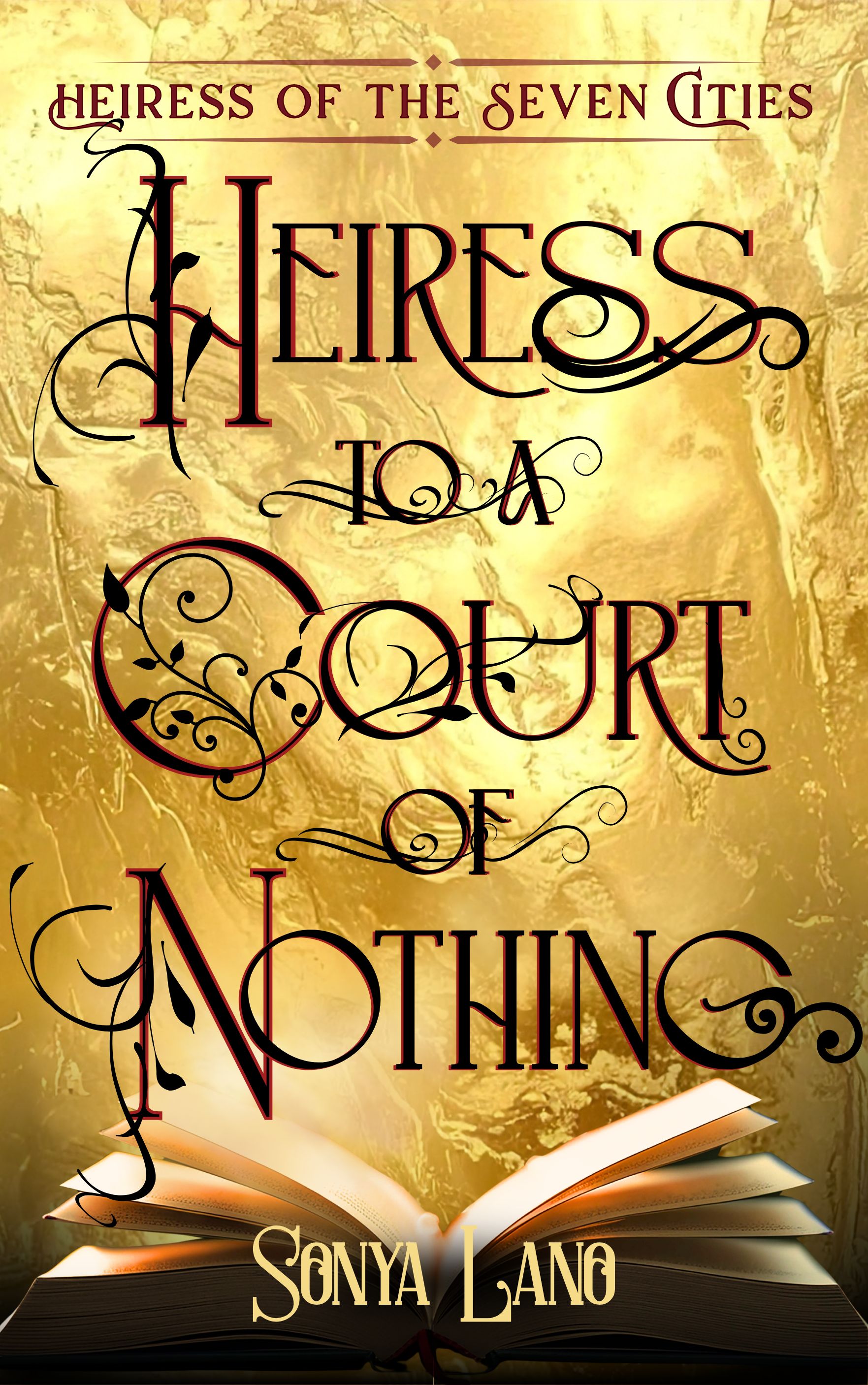
The old cover for anyone curious!


 Sonya Lano